
We Bring Something Irreplaceable: Sacred Space and the Image of God
Why the spaces we inhabit matter — and what we uniquely offer when we show up

In our hyper-connected yet strangely disconnected age, the notion of “sacred space” can feel overly mystical. We move through airports, offices, and scrolling feeds as if all ground is the same. Yet the Bible tells a very different story: God has always been in the business of setting places apart — and He has always invited image-bearers to participate in that setting-apart.
We are not interchangeable cogs in a machine. We are made special — uniquely crafted in the image of God (Genesis 1:26-27). And because we bear that image, we bring something irreplaceable into every space we inhabit.
Yet the dominant Western mindset has largely lost a robust, full-bodied understanding of what it means to be human. We are fearfully and wonderfully made for grandeur, yet we are also capable of frightening violence and destruction. History bears witness to this painful duality. The question that confronts us — in every place we stand — is this: Which space will we inhabit? A space of wholeness and flourishing creativity, or a space of entropy and chaos?
The Bible begins its answer in a garden.
Eden: The Original Sacred Space
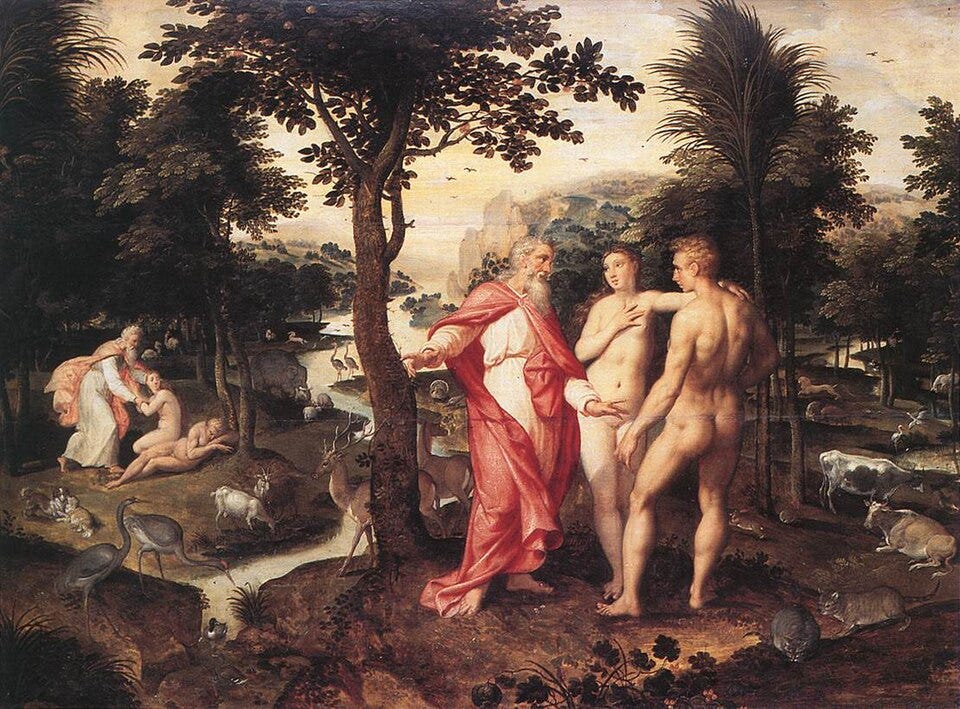
The story begins in a garden. Eden was not merely a beautiful park; it was sacred space—the place where heaven and earth overlapped, where God walked with humanity in the cool of the day (Genesis 3:8). Scholars have long noted how the garden functions as a temple prototype: a river flowing from it (like the river of life in Revelation), trees for food and life, and humanity given the priestly task “to work it and keep it” (Genesis 2:15)—the same language later used for Levitical service in the tabernacle.
Here, Adam and Eve were not passive observers. As image-bearers, they were royal-priests: representatives of God’s rule and presence, stewards who would extend the boundaries of sacred space outward. Their presence was not incidental; it was essential to the garden’s purpose. They brought relational capacity, attentive stewardship, creative dominion, and the ability to name and order creation—all reflections of the God whose image they bore.
When we turned from God and the way of flourishing, we lost access to that sacred space. Cherubim guarded the way back. We became combatants with one another and with the cosmos itself, yet the longing for God’s dwelling with us never left the biblical story.
Tabernacle and Temple: God Provides the Space
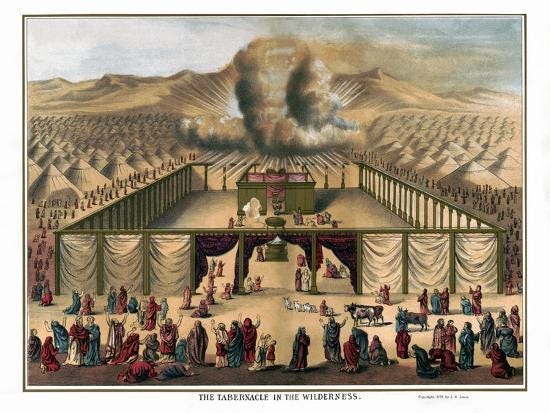
Fast-forward to Sinai. God tells Moses, “Let them make me a sanctuary, that I may dwell in their midst” (Exodus 25:8). The tabernacle was a portable Eden—a graded holy space with an outer court, the Holy Place, and the Most Holy Place. God’s glory filled it. This was never merely about ritual or distance. God’s deep desire has always been to be with His people — not to nag or control from afar, but to walk alongside us, teach us, and love on us. In that sacred space, priests — themselves image-bearers — served as mediators, helping people draw nearer to the holy God who longed to be with them.
Later, the temple in Jerusalem became the fixed heart of Israel’s life. David longed for it (Psalm 84). Solomon dedicated it with the prayer that God’s eyes would be open toward this place (1 Kings 8). Even in exile, God promised to be a sanctuary to His scattered people (Ezekiel 11:16).
In every case, the space was sacred because of God’s presence. But the people—image-bearers—were called to approach it with reverence, to serve within it, and, in doing so, to reflect something of the holy One they represented.
Christ: The True Temple and Perfect Image
Everything changes with Jesus. “Destroy this temple,” He said, “and in three days I will raise it up” (John 2:19). He was speaking of His body. The Word tabernacled among us (John 1:14). In Christ—the true and perfect image of the invisible God (Colossians 1:15)—God’s presence is no longer confined to one mountain or building.
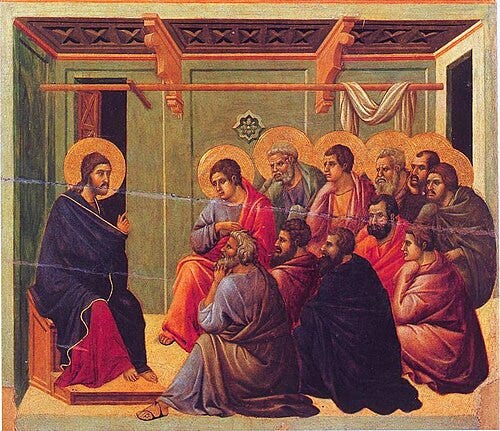
Can you imagine how the disciples felt when Jesus spoke of leaving? They had walked with Him and lived life alongside Him in such radically creative and transformative ways. It is not too much to say that, in following Jesus, they were walking as close to Eden as anyone since Genesis. No wonder, then, that when He said, “Where I am going, you cannot come,” both Peter and Thomas reacted with the raw vulnerability of children watching a parent leave. They knew that wherever Christ walked, He inhabited a space where God was present — and that in His presence, they were finally home.
Yet Jesus did not leave them without hope. Even as He spoke of going away, He promised to prepare a place for them. The language of “mansions” or “rooms” in His Father’s house was never primarily about real estate in heaven. It was about dwelling — about sacred space. Jesus was assuring them that the kind of nearness they had experienced while walking with Him would not be lost. Through His life, death, resurrection, and the sending of the Spirit, Jesus makes a new kind of sacred space possible: the people of God themselves.
We Are the Temple Now
“Do you not know that you are God’s temple and that God’s Spirit dwells in you?” Paul writes to the Corinthians (1 Corinthians 3:16). Not just individually—though our bodies are temples of the Holy Spirit (1 Corinthians 6:19)—but corporately. The gathered church is the new temple, built on Christ as the cornerstone, with living stones (us) being built together into a dwelling place for God (Ephesians 2:19-22; 1 Peter 2:5).
And Jesus promises: “Where two or three are gathered in my name, there am I among them” (Matthew 18:20). The presence is real. The space becomes sacred not because of stained glass or architecture (though those can help), but because image-bearers—restored and indwelt—show up with attentive hearts.
We bring something unique. Our stories, our embodied attention, our capacity for relationship, our creativity, our wounds even—when offered in faith—participate in making space holy. We are not spectators; we are co-laborers in the extension of God’s presence. As image-bearers, we reflect the One who makes all things new, and in small ways we help order the chaos, name the good, and invite others into the light.