

I have been teaching René Descartes this week in my Core Texts class, and I’ve noticed something about him that I don’t think gets discussed nearly enough. Descartes is usually introduced as the great doubter. He is the man who decides to question everything. The senses might deceive us. Our teachers might be wrong. Our inherited ideas might be unreliable. Perhaps even the world around us is not quite what we think it is. Eventually we arrive at the famous cogito...I think, therefore I am. From there, the story often becomes fairly predictable. Descartes becomes one of the fathers of modern skepticism, perhaps even the patron saint of the autonomous individual who refuses to accept anything on authority. But reading the Discourse on Method again with my students, I am not sure that is quite fair to him.
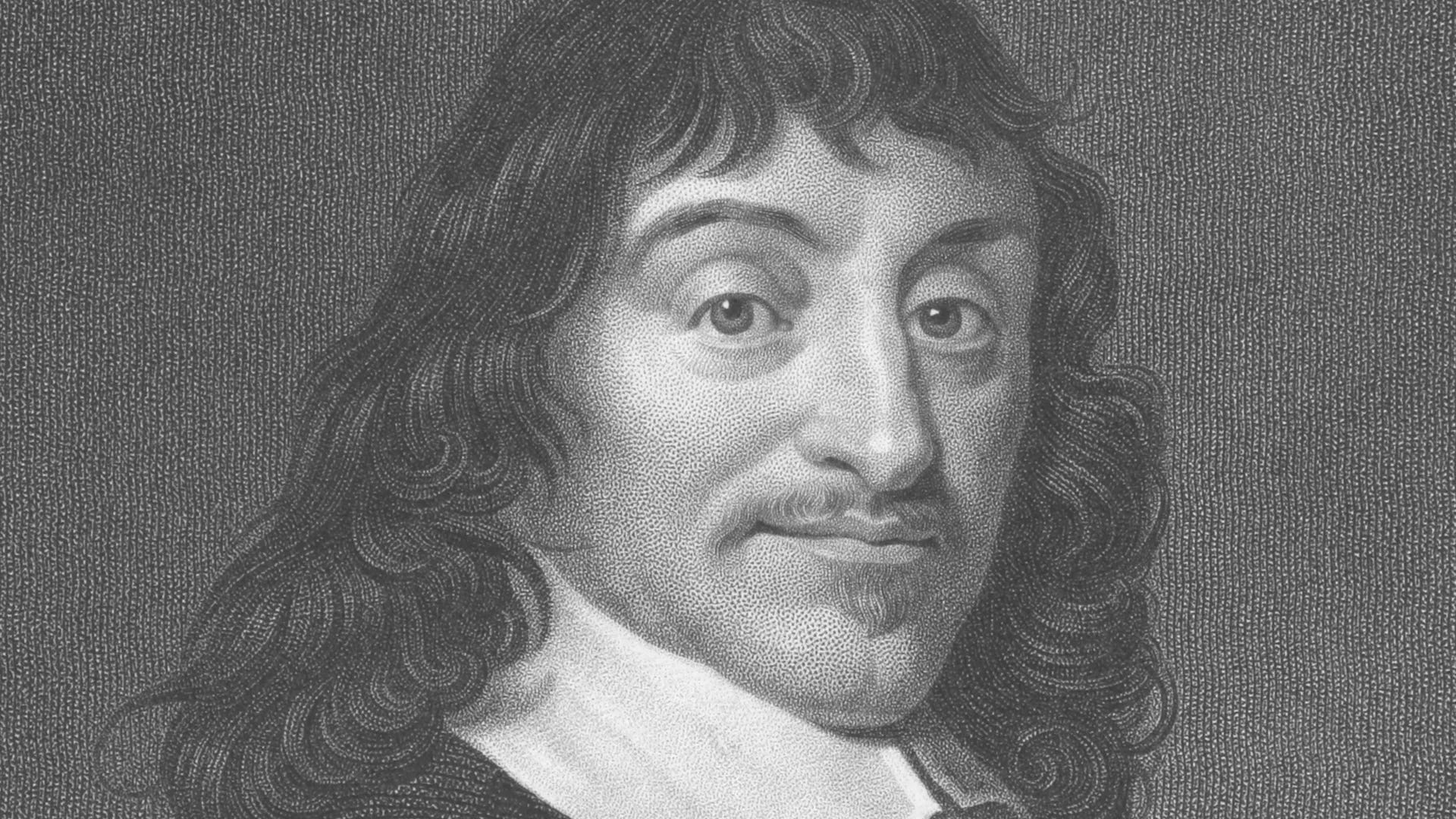
Something else is happening in Descartes. There is humility. Not everywhere, perhaps, and certainly his project will have consequences he could not have imagined. But the impulse that begins the project is not simply arrogance. It is the recognition that a human being can possess an enormous number of opinions without actually possessing much knowledge. Descartes had been educated. He had read the great books. He had studied under respected teachers. He had traveled. He had encountered different customs, different beliefs, and different ways of understanding the world. Eventually he confronted an unsettling possibility: how much of what I believe do I actually know?
That is a good question. In fact, I think it is a necessary one. We inherit almost everything before we can evaluate it. We inherit a language. We inherit assumptions about family, success, morality, religion, politics, education, and happiness. We inherit ways of thinking about ourselves. We inherit ideas about what counts as normal and what counts as strange. Long before we can ask whether something is true, somebody has already told us what the world is like. There is nothing inherently wrong with that. It is simply part of being human. But at some point, maturity requires examination.
Descartes wanted to know whether he could, in some meaningful sense, own his own knowledge. Not because he had invented it, and not because no one had taught him, but because he had examined what he had received closely enough that he could responsibly say, “Yes...I believe this is true.” There is something admirable in that. And this is where I think Descartes is often misunderstood. He is not recommending skepticism as a permanent personality. He is not saying that the wise person is the person who never believes anything, nor is he constructing a lifestyle of suspicion. His skepticism is methodological. Doubt is a tool. The destination is knowledge. Descartes plainly believes that knowledge is better than ignorance. He wants to move through doubt rather than build a house inside it.
That distinction matters because another kind of questioning masquerades as intellectual sophistication but is really something quite different. I told my students this week that you can “why” yourself into chaos. Anyone who has spent time around a child knows how this works. “Put your shoes on.” “Why?” “Because we need to leave.” “Why?” “Because we have an appointment.” “Why?” “Because the doctor needs to see you.” “Why?” At first, the question may be genuine. The child wants to understand. But eventually something changes. “Why?” no longer means, “Help me understand.” It means, “You have not yet given me an answer that forces me to submit.” At that point the question has ceased to be epistemological. It has become a power struggle.
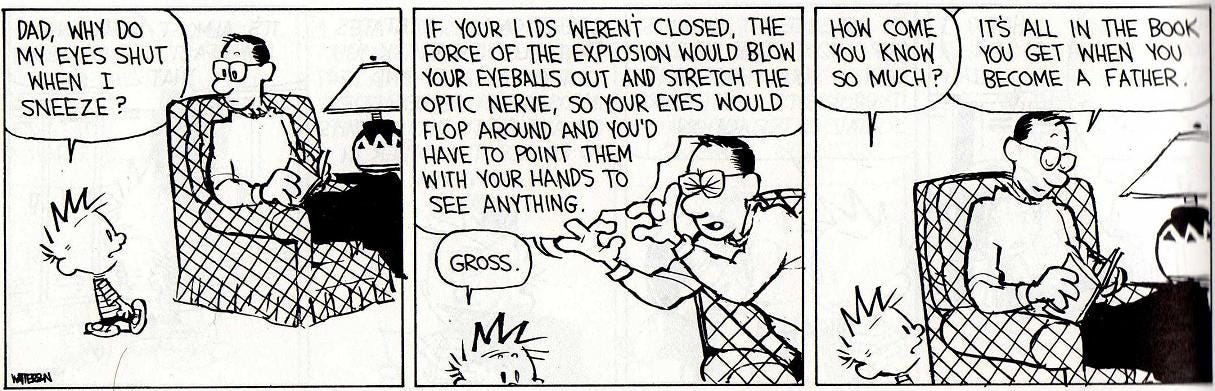
Adults do this too. We simply become much better at disguising it. There is an important difference between questioning something because we desire truth and questioning something because we refuse to allow anything outside ourselves to have authority over us. Those can sound remarkably similar. Both say, “Why?” Both demand reasons. Both challenge assumptions. But they arise from very different dispositions. One is humility. The other can become ego. Epistemic humility says, “I might be wrong, so I need to understand.” Ego says, “You have no right to tell me anything unless you can first satisfy every demand I make.”
The difficulty is that there is no obvious stopping point. Why should I trust my parents? Why should I trust my teachers? Why should I trust tradition? Why should I trust Scripture? Why should I trust scientists? Why should I trust my senses? Why should I trust reason? Why should I trust logic? Why should I assume contradictions cannot both be true? Why should I believe that truth itself is preferable to falsehood? Keep asking long enough, and eventually you discover something strange. The questions do not float in midair. You are standing somewhere while you ask them.
That, I think, is where Descartes becomes far more interesting than the caricature. Where exactly are we standing while we doubt everything? Even Descartes must begin somewhere. To doubt requires reason. To formulate the doubt requires language. To distinguish a good argument from a bad one requires some prior conception of logic. To search for truth requires believing that truth is worth finding. Even the desire to examine one’s beliefs assumes that examining beliefs is preferable to simply having them. No perfectly neutral position lets us evaluate the whole of reality.
We always begin somewhere. We begin as children. We begin inside families. We begin inside languages. We begin inside communities and traditions. We begin by trusting people long before we can judge whether they deserve our trust. The first things we know are given to us. And perhaps that is not a defect in human knowledge. Perhaps it is simply what human knowledge is like.
This is where I find myself both admiring Descartes and questioning whether his project is possible. He is right that inherited beliefs need examination. He is right that education can give us the illusion of knowledge. He is right that repeating something is not the same thing as understanding it. He is right that we should take responsibility for what we believe. But can we ever clear the table completely? Can we ever step outside every tradition, every assumption, every authority, every inherited category, and begin from nothing? I do not think we can.

Perhaps trying to do so produces exactly the kind of chaos I was describing to my students. There is a point at which endless questioning ceases to produce knowledge because the conditions that make knowledge possible have themselves been placed perpetually on trial. A person can demand a foundation beneath the foundation beneath the foundation until there is nowhere left to stand. That does not mean we stop asking questions. Quite the opposite. It means we learn how to ask better ones.
The goal of education should not be to produce people who accept everything they are told. But neither should it be to produce people who instinctively distrust anything they did not invent themselves. Perhaps the goal is something closer to intellectual stewardship. We receive a world we did not make. We receive traditions we did not begin. We receive knowledge discovered by people who lived long before us. We receive language, stories, arguments, institutions, practices, and beliefs. Then we have a responsibility. We examine them. We test them. We ask whether they correspond to reality. We discard what is false. We clarify what is confused. We preserve what is true. And perhaps, if we are fortunate, we hand something wiser to those who come after us.
That is very different from saying, “I will believe nothing unless I can establish it entirely for myself.” No human being actually lives that way. We trust testimony every day. We trust pilots whose mathematics we have not verified. We take medicines whose chemistry we cannot reproduce. We believe historical events occurred because people we have never met recorded them. We use words whose origins we do not know. Human knowledge is profoundly dependent. The question is not whether we will trust. The question is whether our trust is warranted.
And that may be where Descartes still has something important to teach us. His great contribution may not be doubt itself. It may be his insistence that we should care whether the things we believe are actually true. But the virtue that makes that project possible is not suspicion. It is humility. The humble thinker asks questions because he knows he may be wrong. The proud thinker sometimes asks questions because he cannot imagine anyone having the right to correct him. Those two people can use exactly the same word, “Why?” But they are doing very different things.
Perhaps wisdom begins when we learn the difference. The mature person does not stop asking why, but he also does not imagine that every answer must terminate in himself. Maybe intellectual maturity is not finally being able to say, “I believe nothing that I have not proven for myself.” Maybe it is being able to say: I know what I have received. I have examined it. I understand why I believe it. I know where my understanding remains incomplete. And I remain willing to discover that I am wrong.
Descartes wanted knowledge he could truly call his own. Perhaps that aspiration is worth keeping. But maybe the deepest humility comes when we recognize that no knowledge is entirely our own. We always begin by receiving. And then comes the harder task...learning how to receive well.
Thank you !!!
Amazing as always!!
Love every Tuesday so I can
read what you wrote. Excellent again.