
One Sows and Another Reaps
The Hidden Labor of Tilling Ground in a World That Values Only the Harvest

We just wrapped up another Worldview Academy at Samford through Tactical Faith. The lectures on Dante’s Divine Comedy and related topics reminded us why this work matters: creating spaces where people encounter real knowledge, experience change, and learn to flourish by knowing Jesus. Building these environments—so others can grow and then serve in the world—is core to who I am and what our ministry is about.

That longing came into further focus this past Sunday. Our pastor preached from John 4, and these words stayed with me:
“Even now the one who reaps draws a wage and harvests a crop for eternal life, so that the sower and the reaper may be glad together. Thus the saying ‘One sows and another reaps’ is true. I sent you to reap what you have not worked for. Others have done the hard work, and you have reaped the benefits of their labor.” (John 4:36-38)
Jesus spoke this right after His conversation with the Samaritan woman. She went back to her town and told others about Him, and many came to believe. The disciples returned from buying food to find a harvest already ripe before their eyes.
The Value of the Unseen Work
Our culture celebrates the reapers—the visible results, large crowds, dramatic conversions, and measurable impact. That is understandable. Reaping feels rewarding. But it can make the earlier, quieter labor feel undervalued. Sowers till the soil, clear weeds, and plant seeds that may take months or years to show fruit. There is often no spotlight and few immediate rewards.
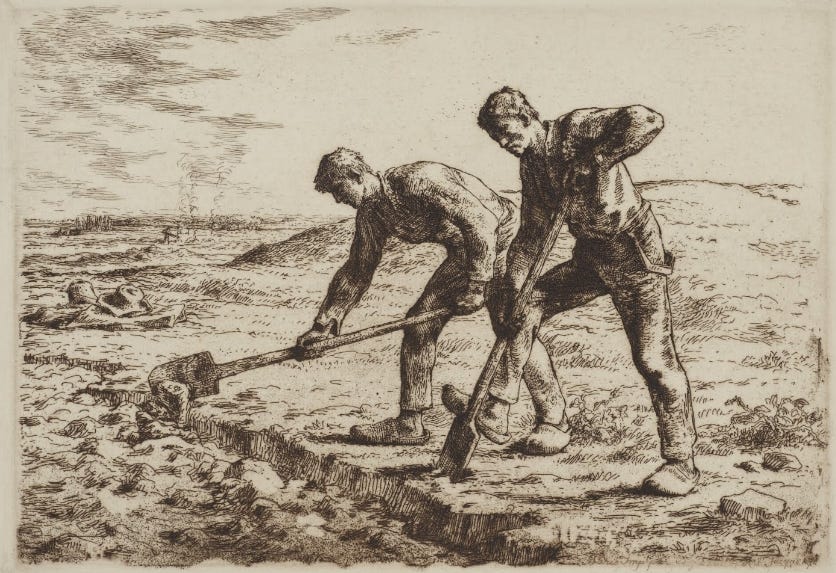
I felt this tension after the Academy. I hope the spaces we create are tilling good ground for others. Yet the world tends to honor the finish line more than the long preparation that makes it possible.
Jesus offers a different view. The proverb “One sows and another reaps” was common in His day. He applies it to the work of the Kingdom: the effort is shared across people and time. Sowers and reapers both matter, and both can rejoice together. The harvest is for eternal life, not personal credit.
Dante’s Divine Comedy illustrates a similar journey. Hell shows wasted lives. Purgatory depicts steady labor in the community to prepare for Paradise.
God-Focused and People-Focused: The X/Y Axis
This brings us to what I call the X/Y axis of Christian ethics in our work. The vertical axis is wholehearted love for God—ordering all we do toward Him first. The horizontal axis is loving others as equal-valued image bearers of God. Both must stay in proper alignment.
The story of the Samaritan woman shows this clearly. The people around Jesus and the woman are largely driven by felt needs and wants: physical thirst, human longing, romantic love, social value, and daily survival. The disciples focus on food. The woman’s history reflects broken attempts to satisfy deep hungers through relationships. Even the townspeople come seeking based on her testimony.
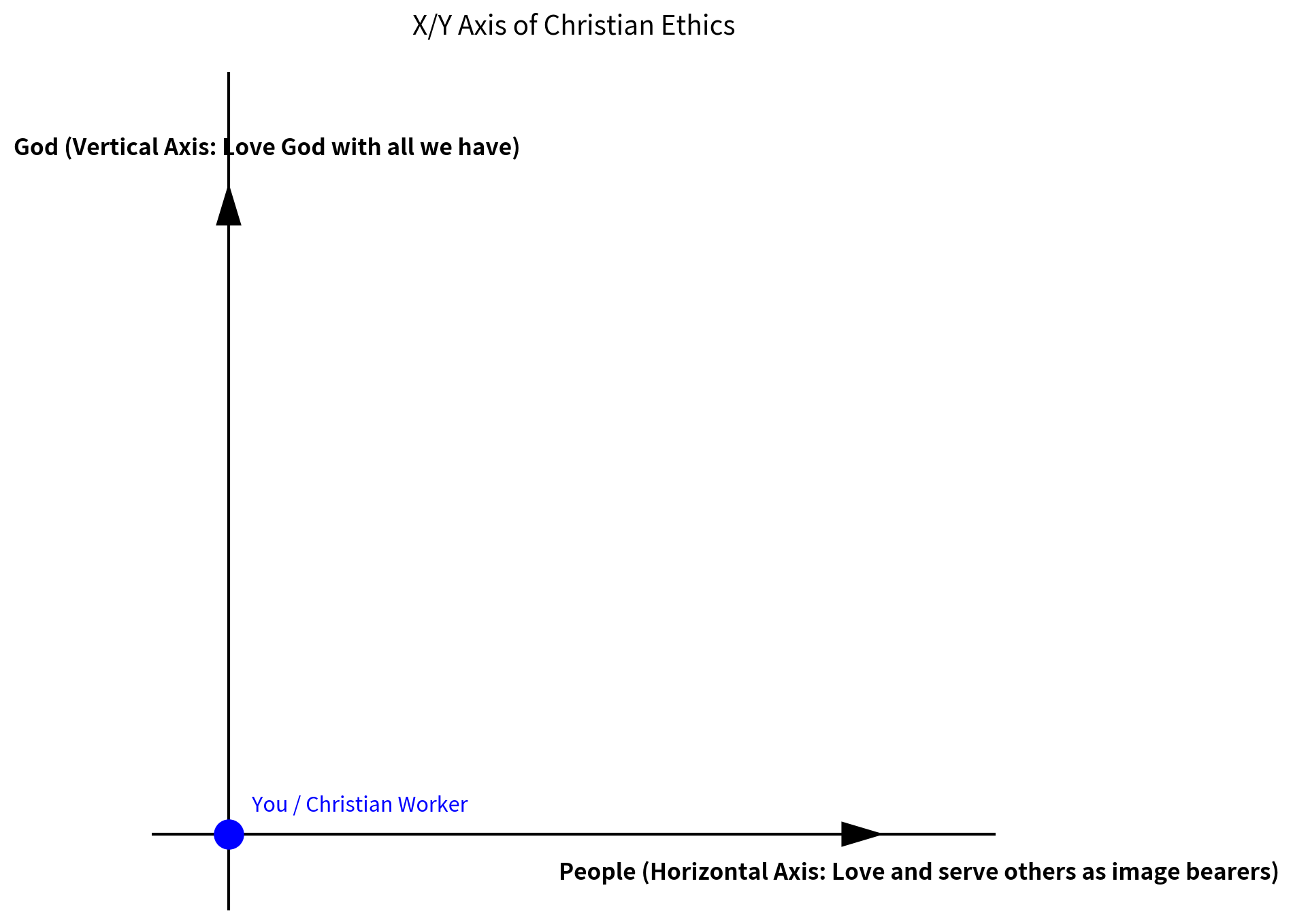
Jesus stands out because He is first God-the-Father-focused. He obeys the Father’s will and timing, even while tired from the journey and aware of His growing reputation. Note the danger there: His disciples were baptizing more people than John the Baptist (John 4:1-2). Success and numbers can easily become the measure of worth, pulling us off the vertical axis. Yet Jesus keeps the Father’s mission central. From that foundation, He turns toward the woman with genuine love—crossing cultural barriers to engage a Samaritan, revealing her life honestly, and offering living water that meets her deepest need.
His physical tiredness is acknowledged, but it stays secondary. The work flows from love of God into love of neighbor. This is the pattern for sowing and reaping in the Kingdom. Our labor—whether teaching, creating spaces, mentoring, or everyday faithfulness—must stay aligned on both axes. We till the ground not for our own acclaim, but because we love God and value people as His image bearers.
Moving Forward Together
This truth frees us from chasing only visible success. Keep creating spaces for genuine encounter—with Scripture, with ideas that shape mind and heart, with Christ Himself. Invest in the slower work of tilling: conversations, teaching, mentoring, and the kind of attention that truly sees people.
The fields are often riper than we realize. If you are in a season of sowing, take heart. The reaping will come, and the joy will be shared. Sower and reaper rejoice together because the harvest belongs to the Lord of the field.