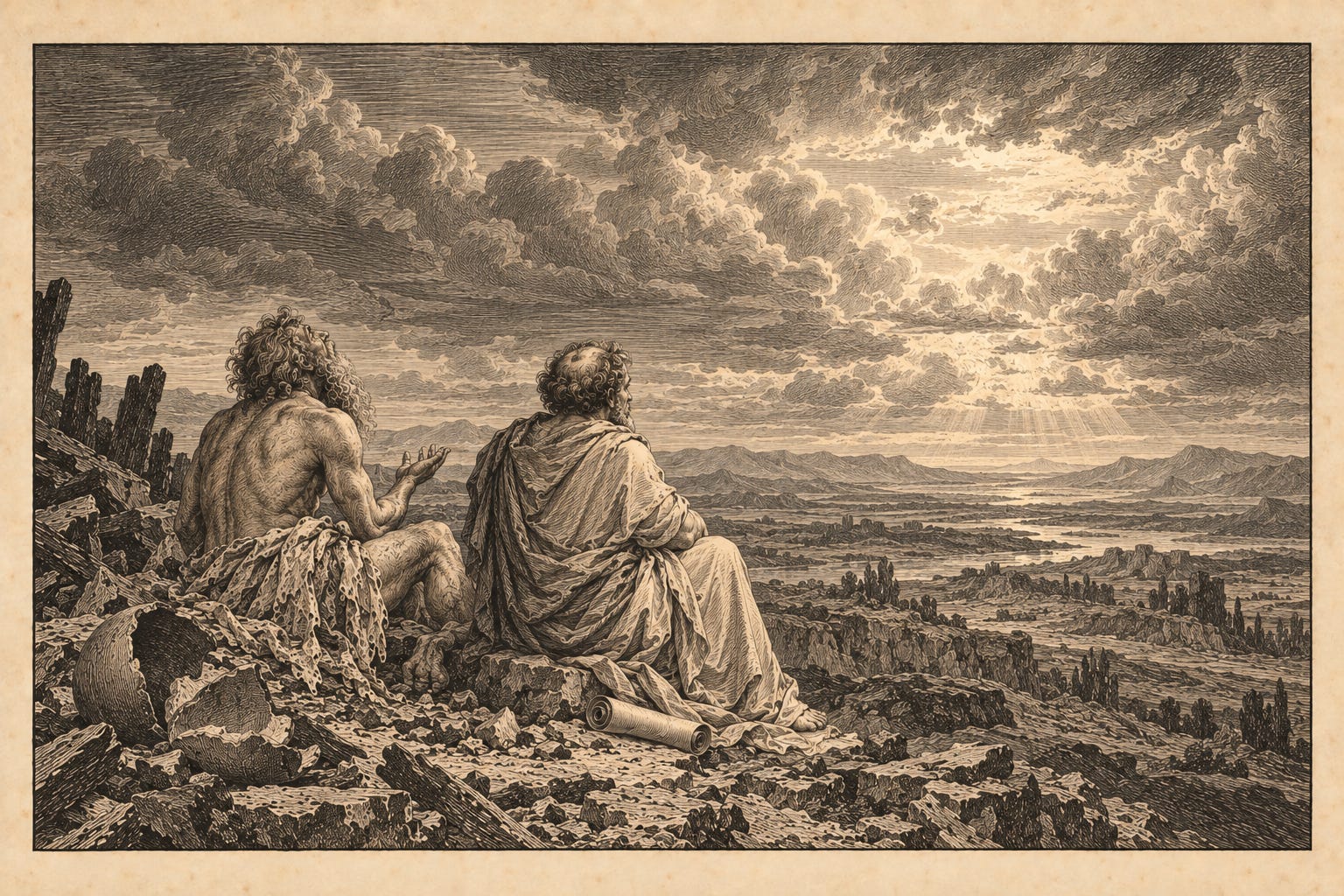
ARISTOTLE: May I sit?
JOB: The others did.
ARISTOTLE: Were they helpful?
JOB: For the first seven days, they said nothing.
ARISTOTLE: And afterward?
JOB: You might consider staying with their original approach.
Aristotle sits. For a while, he takes the advice.
JOB: What do you teach?
ARISTOTLE: Among other things, I ask what human beings ultimately seek. We pursue many things for the sake of something else. Money to purchase what we need. Medicine to restore health. But this cannot go on forever. There must be some good we seek for its own sake.
JOB: And you have found it?
ARISTOTLE: We call it happiness. Though naming it is easier than understanding it.
JOB: You have chosen an interesting place to discuss it.
ARISTOTLE: By happiness I mean a life lived well. The activity of a human being exercising reason and virtue across a complete life.
JOB: I tried to live well. I cared for the poor. I acted justly. I feared God.
ARISTOTLE: Then you possessed goods more valuable than your wealth.
JOB: I did not mention my wealth.
Aristotle looks down.
JOB: Tell me about my children.
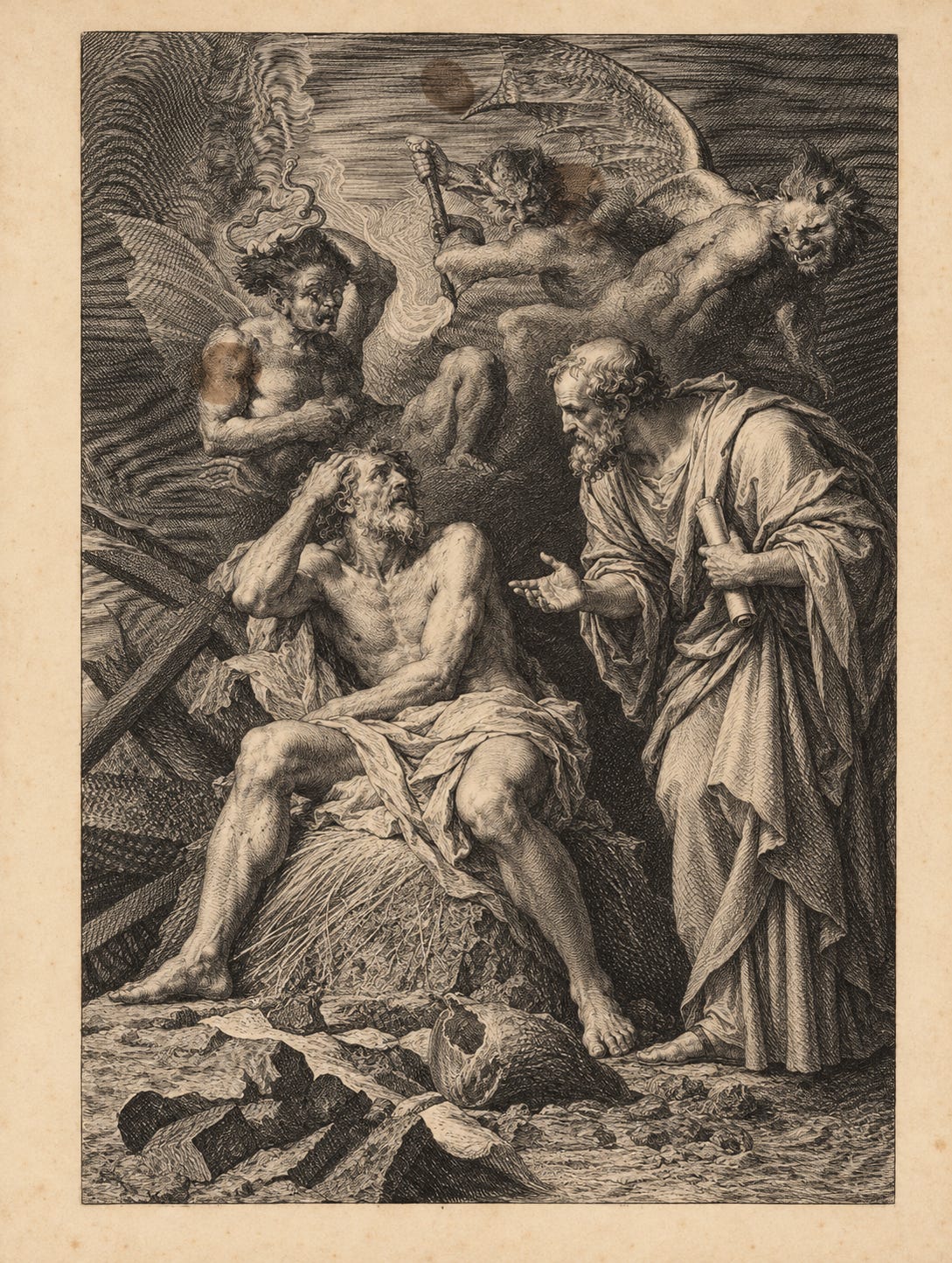
ARISTOTLE: There is a king in our stories. Priam of Troy. He lived long enough to see his household ruined and his city fall. When I thought about happiness, I had to think of him.
JOB: Why?
ARISTOTLE: Because an account of the good life must be able to face such a man. Friendship matters. Children matter. Our bodies and our homes matter. Great misfortunes can wound happiness and obstruct the activities that make a life flourish.
JOB: Even if the man has lived justly?
ARISTOTLE: Yes.
JOB: You should explain that to my friends.
ARISTOTLE: They believe your suffering proves your guilt?
JOB: They keep searching for the wickedness that would make all this reasonable. I suspect they would find my sins comforting.
ARISTOTLE: Comforting?
JOB: If I brought this upon myself, they can avoid it. They can go home, behave properly, and sleep.
ARISTOTLE: I cannot promise them that.
JOB: Good. We may yet have a conversation.
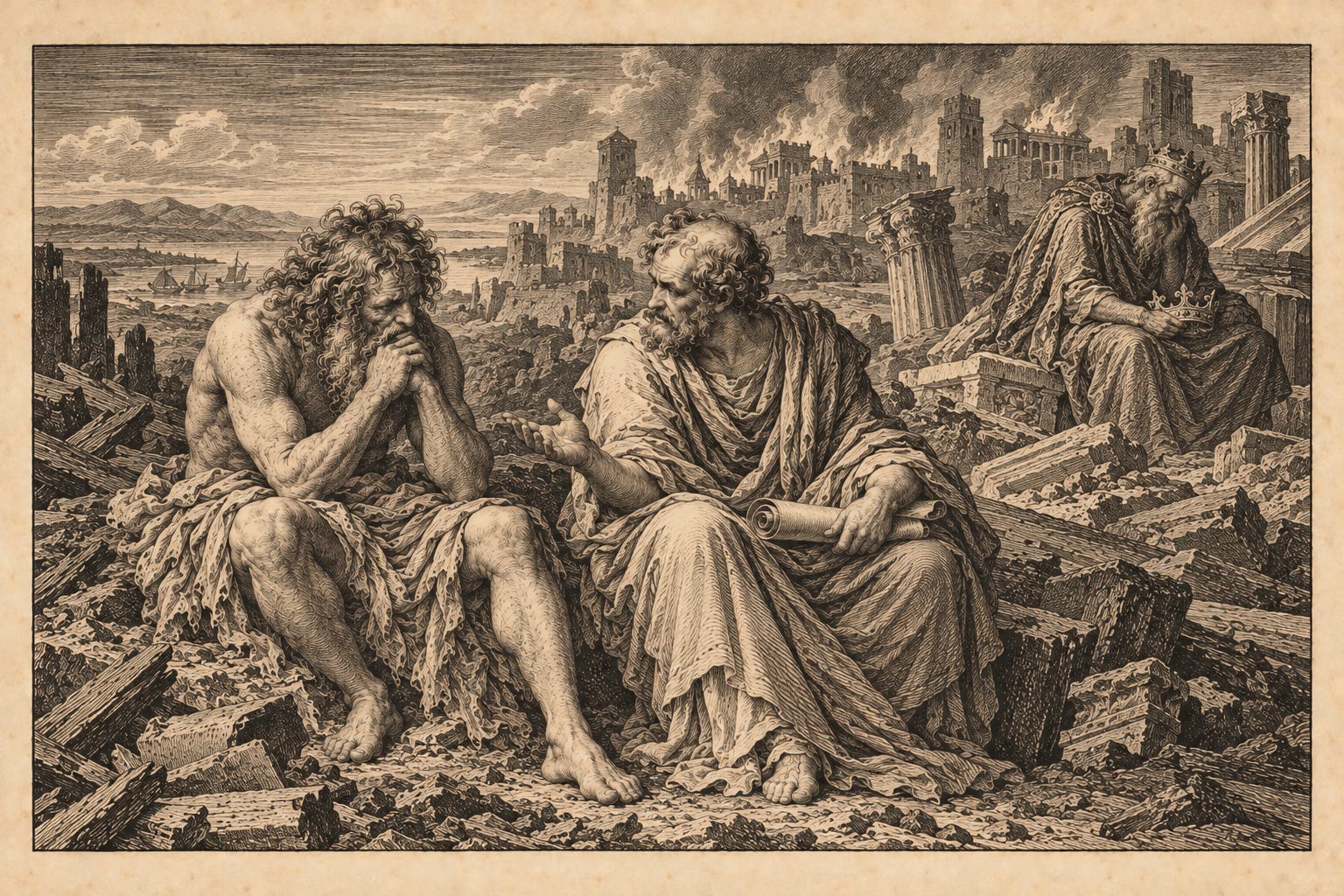
ARISTOTLE: Still, the way a person bears misfortune matters. Courage and justice do not become worthless because circumstances turn against us. There can be nobility in suffering.
JOB: There can also be screaming.
ARISTOTLE: Yes.
JOB: I have cursed the day I was born. I have asked questions that disturbed everyone who heard them. If you came looking for a composed example of human excellence, you should have visited earlier.
ARISTOTLE: Grief need not be evidence of bad character.
JOB: Then leave room for it in your account. A man might love what is good and still be unable to speak without weeping.
The philosopher nods.
ARISTOTLE: I would not tell Priam that his children were unimportant. Nor should I tell you that.
JOB: Some people become remarkably wise about the losses of other men.
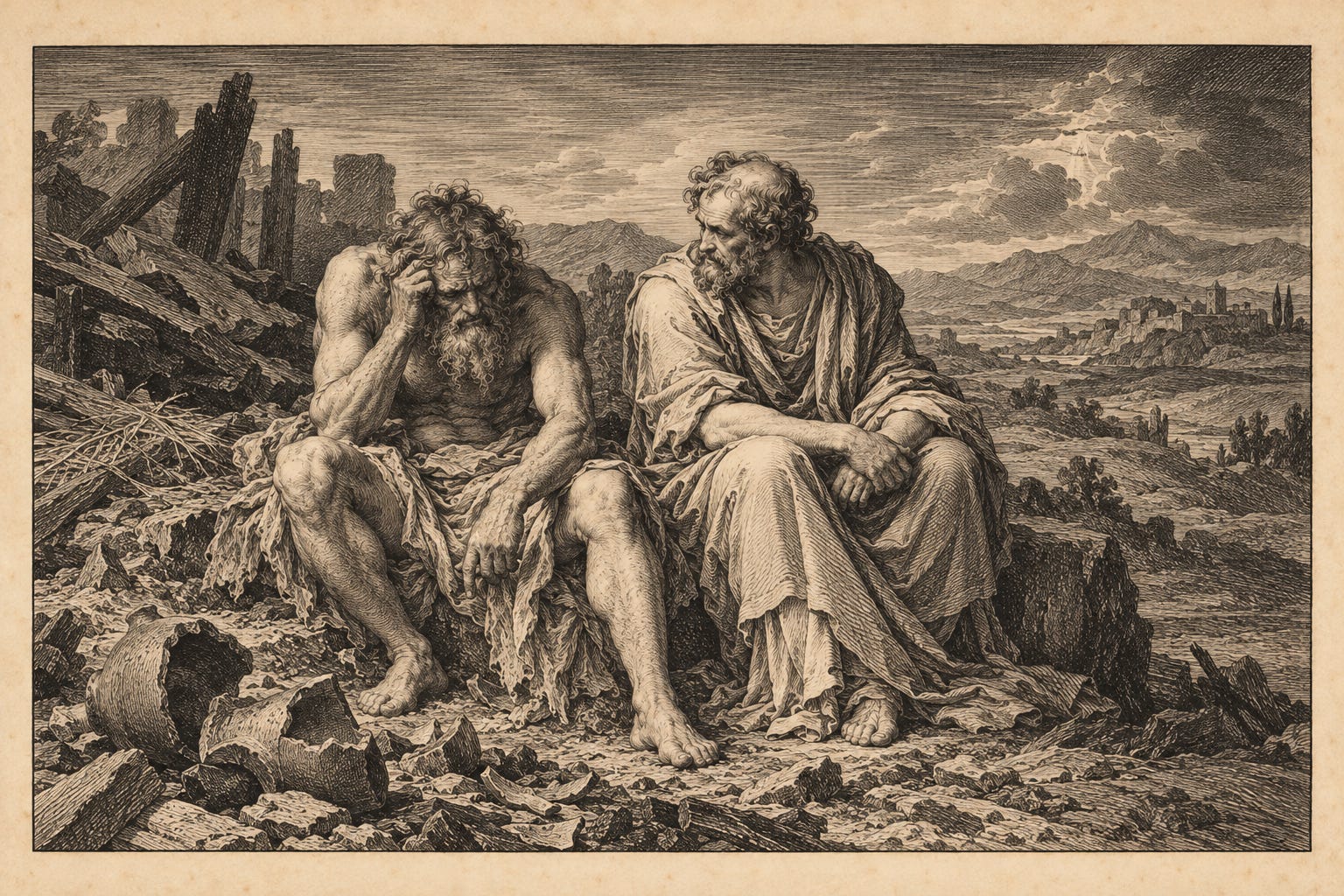
ARISTOTLE: You said you feared God. Was that part of your happiness?
JOB: It was part of everything.
ARISTOTLE: Did you serve him because he had blessed you?
JOB: That question has followed me through this entire misery.
ARISTOTLE: It seems worth asking.
JOB: It is. But consider what you are asking. If I loved God because my household prospered, then perhaps prosperity was what I loved most.
ARISTOTLE: And God was a means to obtaining it.
JOB: A useful arrangement. Worship offered. Protection received.
ARISTOTLE: But gratitude for gifts need not make affection for the giver false.
JOB: No. I was right to give thanks for my children. I was right to delight in them. Must I now pretend they meant little to me in order to prove that God meant much?
ARISTOTLE: I see no reason why you should.
JOB: Neither do I.
ARISTOTLE: Yet the question remains. When the gifts are gone, is the giver still worthy of love?
Job is quiet for a long time.
JOB: I have demanded that he answer me. I have searched for him. I have wondered why he would make me and then allow this.
ARISTOTLE: You continue to address him.
JOB: Yes. Though you should hear some of what I say.
ARISTOTLE: Perhaps I can help describe what has happened to you. Your losses are real. Your integrity is real. The second does not make the first disappear.
JOB: That is already more help than I have received from several of these “theologians”.
ARISTOTLE: But you want more than a description.
JOB: I want God to hear me.
ARISTOTLE: And an explanation?
JOB: Yes. I want to understand the world in which these things can happen.
ARISTOTLE: That desire I understand.
JOB: Would understanding make my children live again?
ARISTOTLE: No.
JOB: Then even the answer I keep demanding would leave me grieving.
Neither man speaks.